

How to Design a Garden with Year-Round Interest (My Studio Secrets)
Most gardens look brilliant for six weeks in summer, and then quietly collapse into a grey, twiggy sulk for the rest of the year. But it doesn’t have to be that way.
As a garden designer, my job is to create spaces that feel alive, structured, and beautiful in every season, not just in June when most things seem to reach their peak.
Here’s the simple formula I use in every design.
1. Start With Structure (This is non-negotiable)
If flowers are the jewellery, structure is the bone structure.
Structure comes from:
evergreen shrubs
strong shapes
winter silhouettes
plants that don’t “disappear” in October
This is the element most home gardeners skip, and it’s why borders look bare in winter.
Evergreens are your winter backbone and focal points. Without them, there’s nothing to hold the eye.
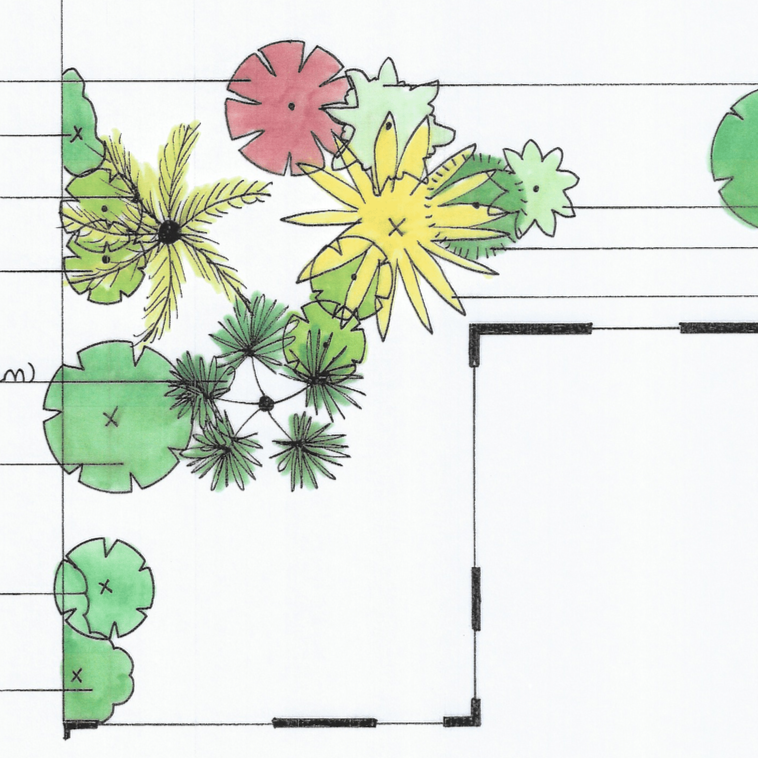
Large trees and shrubs - sculptural layer designed first.
2. Add Seasonal Layers
Once the structure is in place, you can start layering.
Think of your garden as a year-long story:
Spring: bulbs, fresh shoots, blossom
Summer: perennials, colour, fullness
Autumn: grasses, seed heads, fiery foliage
Winter: silhouettes, berries, evergreen texture
Layering creates rhythm so that your garden quietly changes outfit many times a year without ever feeling empty. Annuals can also be used to provide colour where there is physical or time gaps.
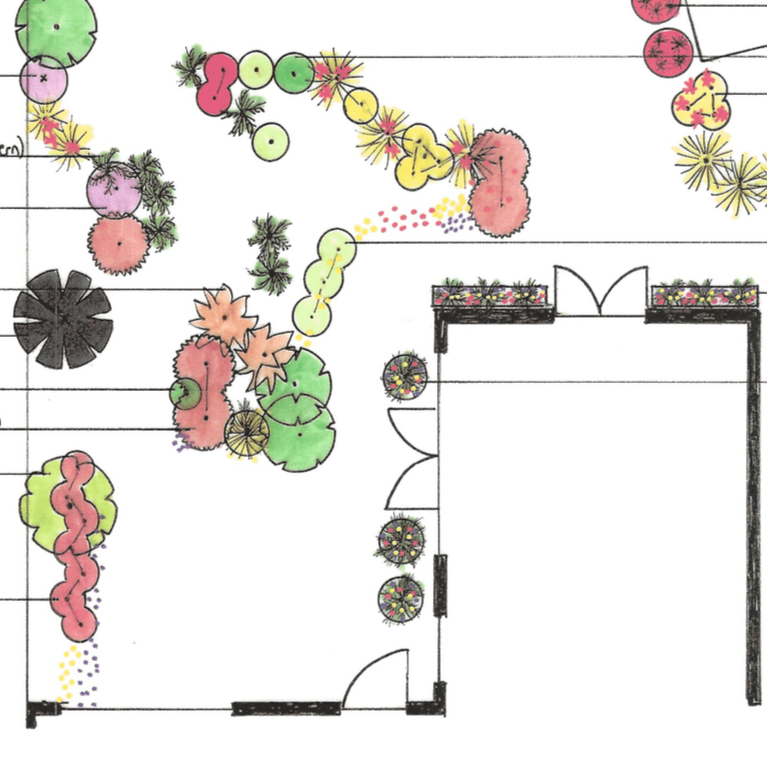
Smaller, seasonal layers planned next.
3. Repeat, repeat, repeat.
If your border looks chaotic, it’s usually because there’s one of everything. This is what happens when you buy a couple of plants here and there.
Designers don’t do that.
We repeat plants in:
colour
shape
texture
height
Repetition creates calm and cohesion. It pulls the garden together the way rhythm pulls music together.
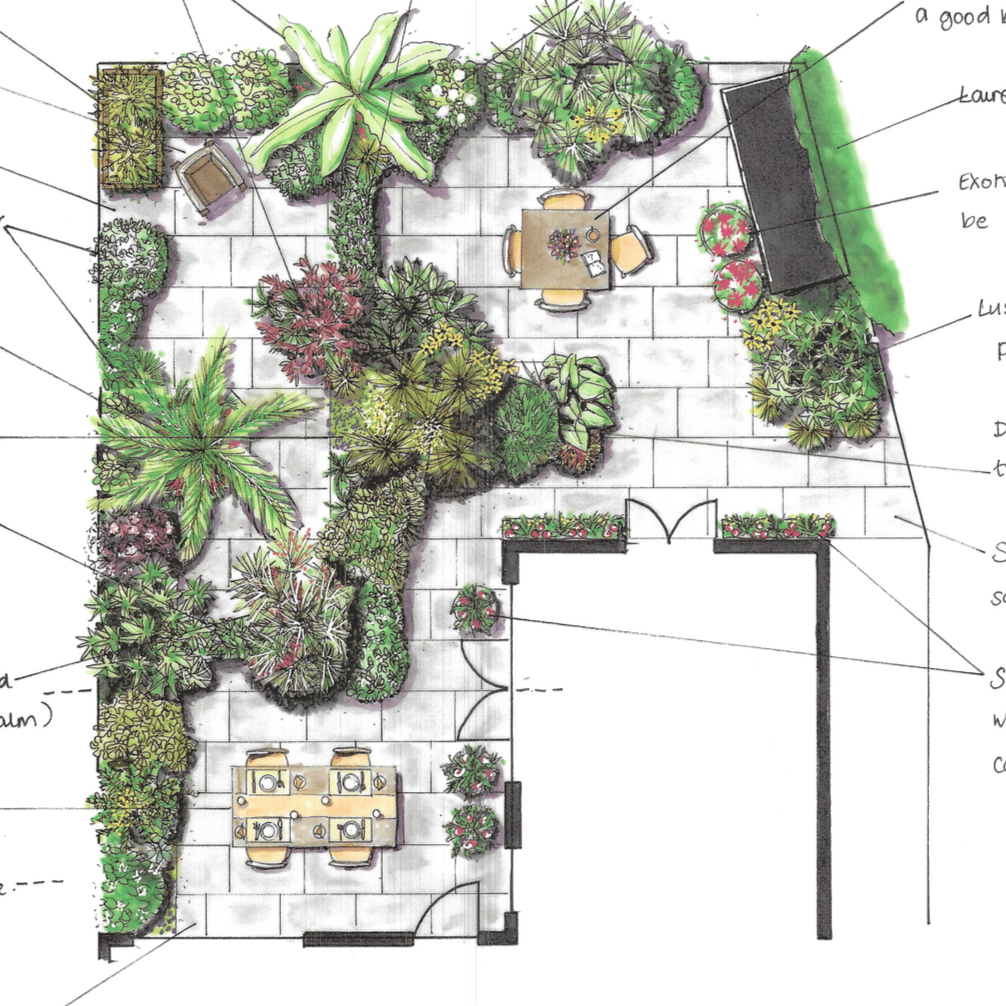
Lots of repetition and textural interest in the design.
4. Introduce Texture
Texture is the luxury element.
For examples, mix:
glossy leaves with matte
fine foliage with bold
structural forms with soft movement
It’s the difference between a garden that feels “nice” and a garden that feels rich, layered, and intentional.
5. Add the Magic (Light and Movement)
Winter gardens rely on atmosphere.
You need:
grasses catching low light
seed heads in frost
branches casting shadow
evergreen forms grounding everything
plants that sway, flutter, or whisper in the wind
moving water
ways to attract wildlife
Light + movement = winter magic.
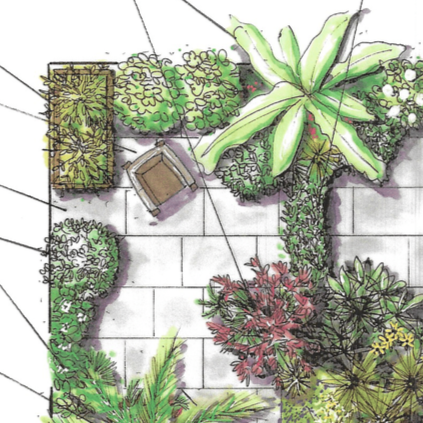
Cosy hidden corner of the garden for quiet reflection. Space left for a water feature next to the chair. Two covered archways lead through to this space. It feels like a labyrinth that you could get lost in. The client requested immersion and quirkiness.
When is the optimal time to plan all this? Winter.
Designing in winter means:
the structure is visible
the weak spots are honest
you see the garden at its “minimum”
decisions become clearer
Plan in winter → plant in spring → enjoy the whole year.
This is genuinely the smartest, kindest way to work with your garden.
Would you like the help of a garden designer?
I offer Garden Design, Garden Consultations, and Garden Coaching, all tailored to help you create a space that feels alive in every season, and available at a variety of price points to make it possible for everyone.
New Year Gift Idea:
Consultations and coaching sessions are available as gift vouchers - a thoughtful present for anyone who loves their garden.
And…
If you’d like to start with something simple, download my free guide: